
At the end of April, ES@S attended the annual River Restoration Centre (RRC) Conference in Newport, Wales. Over the two-day event (29–30 April), we were actively involved throughout the programme, presenting our latest work on the use of UAVs (drones) in river restoration.
Professor Julian Leyland and Dr Chris Tomsett represented ES@S, sharing our ongoing research that highlights both the benefits and practical applications of UAVs in river restoration projects. At present, UAVs are often used primarily for capturing overview images before and after restoration. However, their potential to acquire high-quality, quantitative data that supports scheme monitoring and evaluation which ultimately feeds back into best practice is still underutilised.
A recurring theme across the conference was the variability in restoration outcomes and the difficulty of defining what constitutes a truly “successful” scheme. Closely linked to this was a strong consensus on the importance of monitoring in improving future restoration efforts. In an era where robust, quantifiable evidence is increasingly required to justify and refine restoration work, UAVs represent a powerful and flexible addition to the river restoration practitioner’s toolbox.
Day 1
On day one, we attended a range of insightful talks and showcased a summary leaflet outlining key findings from our draft report on UAV use in river restoration. The poster session and breaks provided valuable opportunities to discuss our work with both experienced and novice UAV users.

Day 2
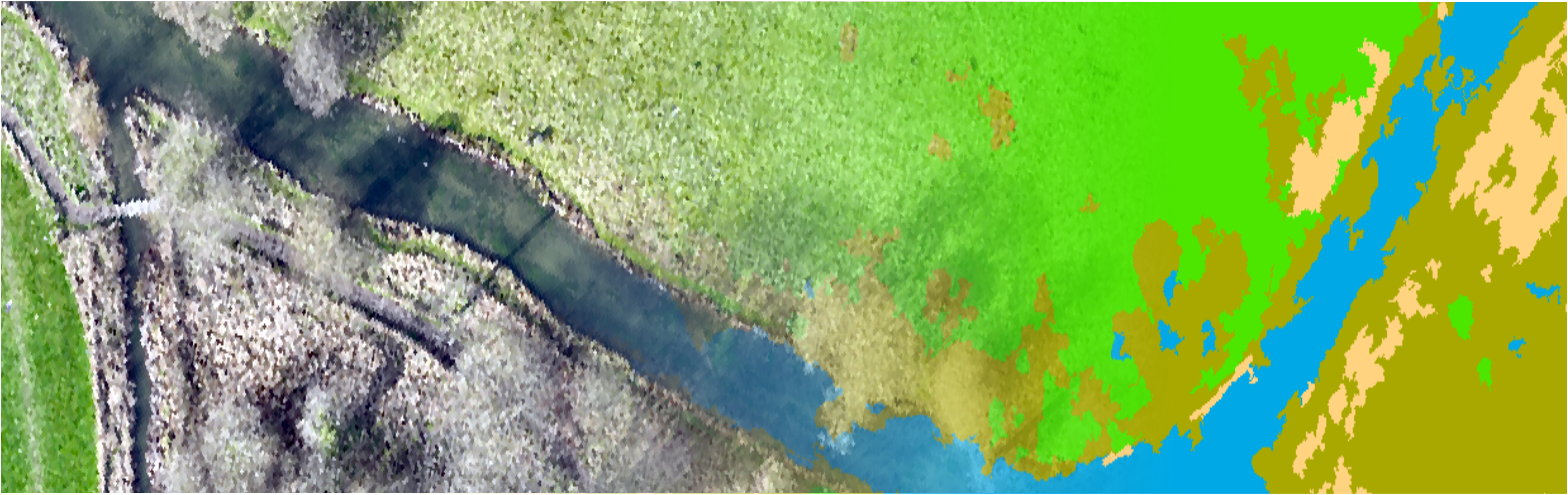
Day two saw ES@S contribute to the popular workshop on ‘new tools in river restoration’. We presented a suite of tools currently under development to support UAV users within the restoration community. These open-source Python Colab notebooks are designed to require minimal user input while delivering highly usable outputs. Current capabilities include palaeochannel visualisation and image classification, with plans to expand into additional, restoration-relevant tools. Importantly, these resources are freely available for anyone to use and benefit from.

We also gathered valuable feedback from workshop participants on how UAV guidance might sit within PRAGMO, and how UAVs could best support restoration projects. Preliminary findings indicated that only around half of respondents were involved in regular monitoring, despite most being engaged in scheme design and implementation. Awareness of PRAGMO guidance was generally low, yet nearly all respondents felt that integrating UAV guidance within it would be highly beneficial. Commonly cited barriers to monitoring included funding limitations and a lack of prioritisation, particularly concerning given that most respondents felt current monitoring only partially evidences project success. Crucially, for UAVs to be used more effectively, improved understanding, targeted training, and access to practical, user-friendly tools were consistently identified as priorities. These are key areas that ES@S is committed to advancing.

In the afternoon, Dr Chris Tomsett presented an overview of our report findings in a well-attended session on monitoring methods and results. The presentation highlighted the potential of UAVs across multiple scales, while emphasising their role as a complementary tool alongside existing monitoring methods, not a replacement.

Overall, attendance at the RRC Conference highlighted significant challenges facing the restoration sector, including funding cycles, legislative constraints, and limited connectivity between projects. At the same time, the conference demonstrated strong momentum towards long-term, evidence-based monitoring and a willingness within the community to collaborate and share learning. At ES@S. we firmly believe UAVs have a crucial role to play in supporting this future direction.

Find out more by using the link below: